
Duping Fairly Traded Honey Shampoo: A Journey Through Ingredients

If you’re a fan of Lush’s Fairly Traded Honey Shampoo, you already know how nourishing it feels and how well it cleanses. The rich lather, the sweet honey scent, and the gentle cleansing make it a luxurious product. But have you ever wondered what goes into making such a shampoo? I recently embarked on a journey to create a homemade version of this popular product, call it a dupe if you will, only using different ingredients! Disclaimer! it is not an exact copy, but its pretty close in skin feel and performance. While I won’t be sharing the exact formulation here (you can purchase the formulation below), I’d love to take you through the key ingredients. If you’re interested in making this yourself, I’ve put together a detailed guide, including step-by-step instructions for creating the Copy Cat Recipe, available for purchase as a PDF. You can find the link at the end of this post.
The Star Ingredient: Fairly Traded Zambian Honey
At the heart of this shampoo I used Zambian honey sourced from ethical beekeepers. Honey is a natural humectant, meaning it draws moisture to the hair, leaving it soft and hydrated. Lush’s commitment to fair trade ensures that the honey is sourced responsibly, and I wanted to honour that by using a similar high-quality, ethically sourced honey in my formulation. In fact, my version contains well over 50% honey, just like the original.
The Cleansing Base: Sodium Lauryl Sulfate (SLS)

This is a stock image but it is pretty close to the appearance of the Self Preserving Honey Shampoo.
Lush’s formula uses Sodium Laureth Sulfate (SLES), a gentle surfactant that creates a rich lather. In my version, I substituted it with Sodium Lauryl Sulfate (SLS), which is more readily available from resellers in the UK. While SLS has a reputation for being harsher than SLES, when used in the right concentration and balanced with other soothing ingredients, it can still provide a luxurious cleanse without stripping the hair of its natural oils.
The Nourishing Agents: Linseed Mucilage and Sunflower Lecithin
Linseed mucilage, derived from flaxseeds, is a natural thickening agent that also adds a silky, conditioning feel to the shampoo. It helps to detangle hair and improve manageability. In my detailed formulation guide, I include step-by-step instructions to making your own linseed gel so that you get the correct consistency. There are many instructions on the internet however they do give varying viscosities that may not be suitable for the honey shampoo.
The Gentle Touch: Cocamidopropyl Betaine
The original formula uses Lauryl Betaine, a mild surfactant that helps create a creamy lather and reduces potential irritation from harsher cleansing agents. I had difficulty finding Lauryl Betaine so I substituted it with cocamidopropyl betaine, a similar ingredient derived from coconut oil, that is much more widely available in most regions of the world.
The Fragrance: Geranium and Orange
In the original, a blend of geranium oil, neroli oil, rose absolute, beeswax absolute, and bergamot oil for its signature scent. To simplify my version, I opted for a combination of essential oils of geranium oil and orange. Geranium oil adds a floral, slightly rosy aroma, while orange oil brings a bright, citrusy note.
Why I Love This Formula
Creating this shampoo was a labour of love, and I’m thrilled with how it turned out. By using over 50% fairly traded honey, I was able to replicate the rich, hydrating feel of the original product. The combination of linseed mucilage, sunflower lecithin and cocamidopropyl betaine ensures that the shampoo is both cleansing and conditioning, while the geranium and orange essential oils provide a delightful sensory experience.
Ready to Make Your Own?
If you’re inspired making this shampoo yourself, I’ve put together a detailed guide that includes the full formulation, step-by-step instructions for creating linseed mucilage to the correct viscosity, and tips for perfecting your batch. You can purchase the PDF guide here. It’s perfect for DIY enthusiasts or anyone who wants to take control of their hair care routine. The PDF will allow you to make your Fairly Traded Honey Dupe using locally sourced honey at an affordable price! THIS IS NOT A NATURAL PRODUCT, if you are looking for a wholly natural and organic alternative to this product, you can purchase the Natural Honey Body Wash HERE.
What’s Included?
Like all my PDF formulations, the Self Preserving Honey Shampoo is written for home crafters and professional formulators alike. As such it gives instructions in percentages and grams, with full method of manufacture. I also add detailed explanation of each ingredient, with helpful hints and tips to ensure your Fairly Traded Honey Dupe comes out perfect every time. I also give advice on the best way to include a preservative if you wish to use one! As a bonus I have also added a minimalist formulation for making the shampoo using SLES but with no linseed mucilage. Instead of using cocamidopropyl betaine, I have used decyl glucoside.
Final Thoughts
Understanding the ingredients in your favourite products can be incredibly empowering. Whether you’re a DIY beginner or a professional cosmetic formulator, making your own shampoo allows you to customize it to your needs while knowing exactly what’s going into it.
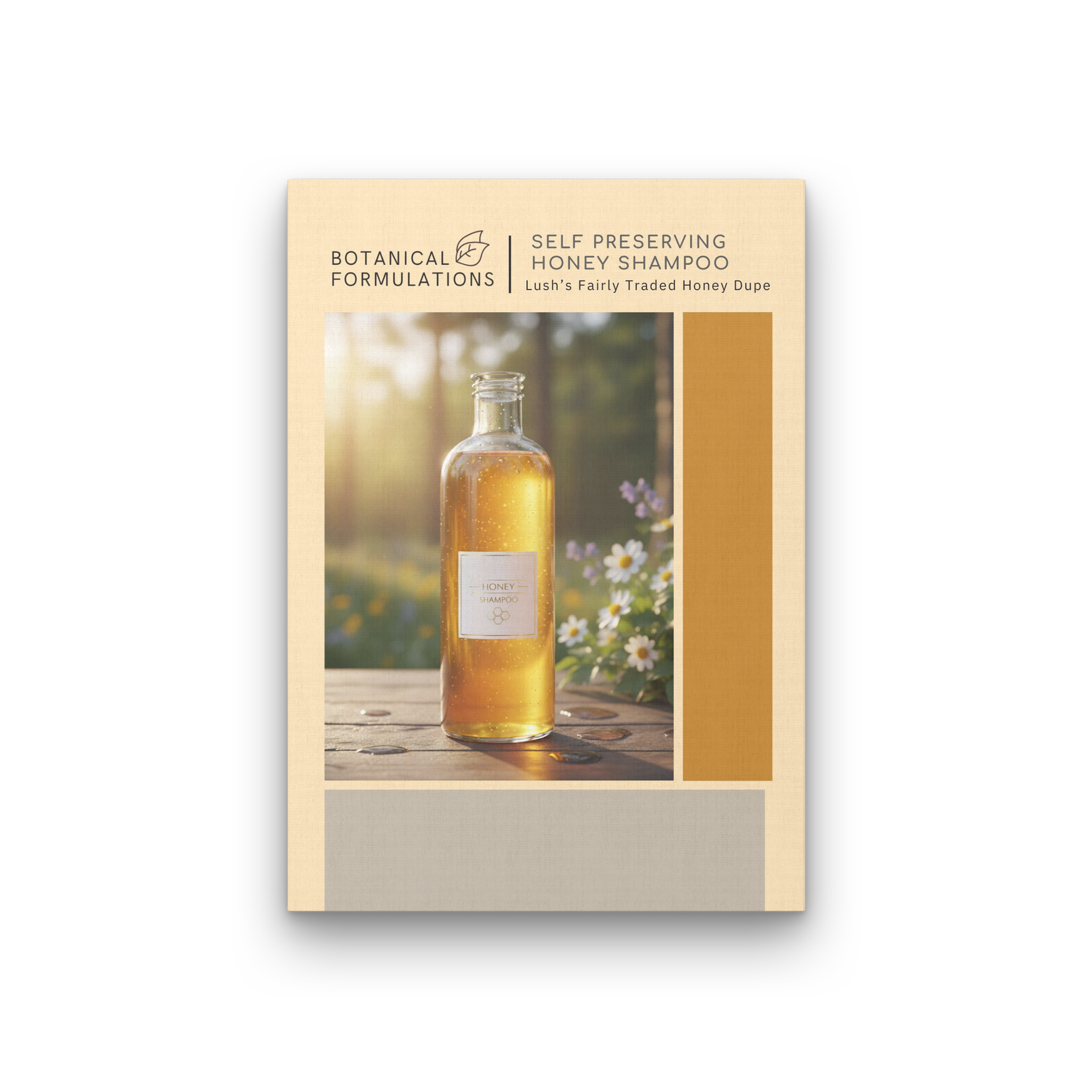
The Self Preserving Honey Shampoo is my copycat of a very well known self preserving and luxurious honey cleansing product. Like the glorious original, it contains over 50% honey, is infused with flax seed mucilage, and is fragranced with a similar blend of essential oils. This is a good dupe and NOT an exact copy. I have substituted some ingredients for more widely available ones. For example, the original uses lauryl betaine, where I have used cocamidopropyl betaine, the original uses Sodium Laureth Sulphate (SLES) whereas I have chosen Sodium Lauryl Sulphate (SLS). I have also included detailed instructions for making Flax Seed Mucilage.
As a bonus I have made a minimalist variation using sodium laureth sulphate and decyl glucoside omitting the flax seed gel and cocamidopropyl betaine. You can find more information about the product in this blog post.
05/25 As an afterthought (and having reviewed a different sample) I have added another version of the Honey shampoo. So now, the PDF contains 3 versions.
IN ALL THREE VARIATIONS I HAVE TRIED TO RECREATE THE SAME LUXURIOUSNESS AND FUNCTIONALITY OF THE ORIGINAL WHILE USING DIFFERENT INGREDIENTS!
NOTE: THIS IS NOT A NATURAL OR ORGANIC FORMULATION